



August 15, 2026
Receive a personalized quote quickly—simply fill out the form below!
A garage addition can give your home more space, better organization, and improved everyday convenience. For many homeowners, the garage is more than a place to park a car. It can serve as a storage area, workshop, hobby space, home gym, or protected entry point into the house. With the right design, a custom garage can make your property more functional while adding long-term value and curb appeal.
A garage addition is a practical way to expand your usable space without changing the main layout of your home. It can protect vehicles from sun, rain, wind, and seasonal weather while giving you room for tools, outdoor equipment, and household storage. Homeowners also appreciate the added convenience of having a secure place for daily items like bikes, lawn equipment, sports gear, and holiday decorations. Whether attached or detached, a well-planned garage can make your home easier to live in and maintain.
An attached garage connects directly to the home, making it a convenient option for everyday use. This layout is especially helpful when carrying groceries, loading children into the car, or moving items in and out during bad weather. Attached garages can also be designed to blend with your home’s roofline, siding, trim, and exterior accents for a seamless look. For many homeowners, this option feels like a natural extension of the house.
A detached garage offers flexibility because it can be placed in a location that works best for your property. This option is often ideal for larger yards, corner lots, rural homes, or properties where an attached garage is not practical. Detached garages can provide storage, vehicle protection, and workshop space while keeping noise, dust, and fumes away from the main home. They can also be designed with their own style while still complementing the rest of the property.
The size of your garage should match how you plan to use it now and in the future. A one-car garage can work well for smaller homes, single vehicles, lawn equipment, or basic storage needs. A two-car garage gives homeowners more flexibility for parking, storage shelves, workbenches, and household items. Multi-bay garages are a smart choice for families with several vehicles, recreational equipment, trailers, boats, or larger workshop plans.
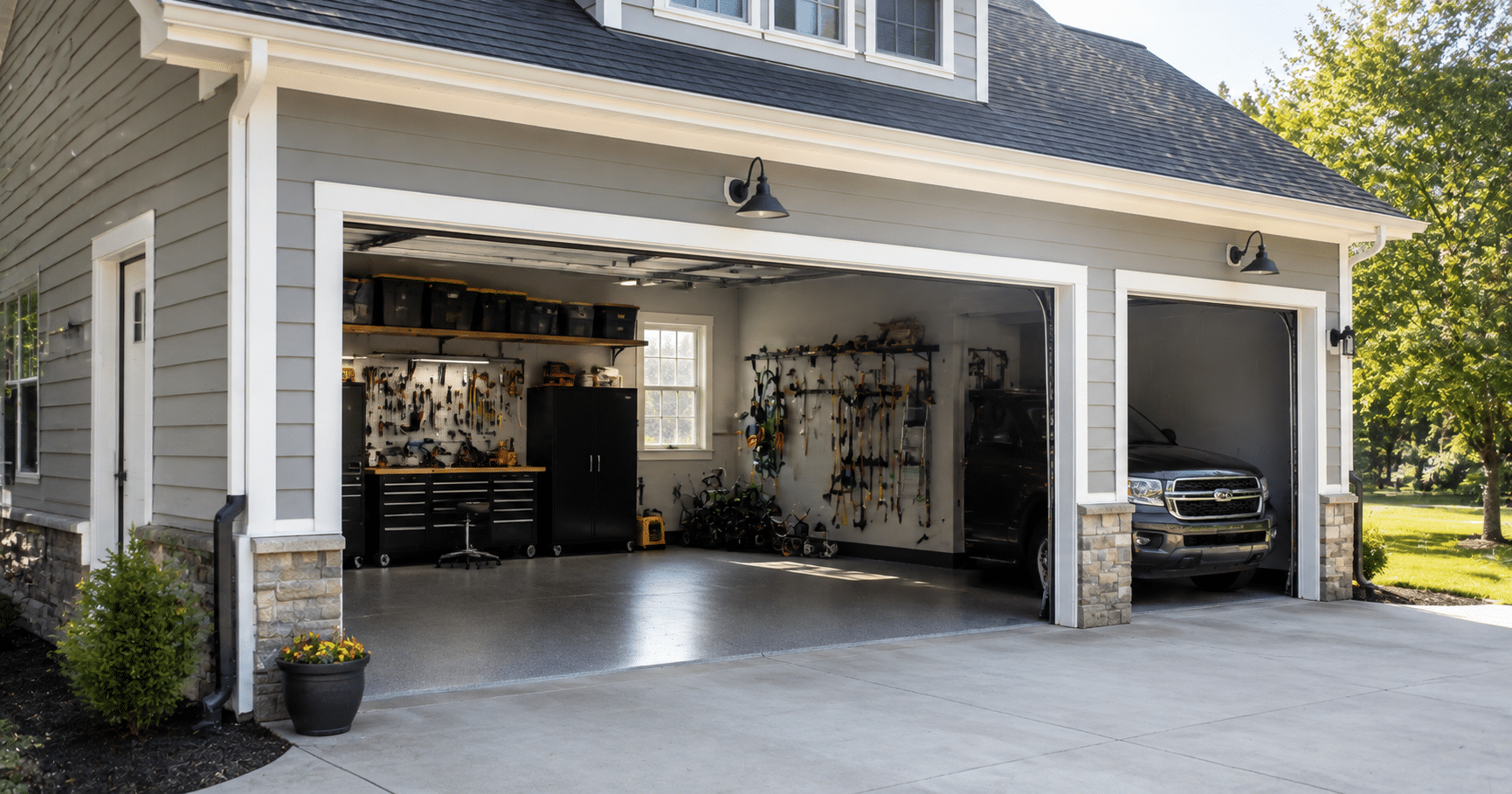
Storage is one of the biggest reasons homeowners choose to build a garage addition. Wall-mounted shelves, cabinets, ceiling racks, pegboards, and built-in storage systems can help keep the space organized and easy to use. Instead of stacking boxes on the floor, a thoughtful storage plan can create zones for tools, seasonal items, yard supplies, and sports equipment. A well-organized garage makes it easier to find what you need and keeps clutter out of the main living areas.
A garage workshop can be a valuable space for woodworking, repairs, crafts, home projects, or hobbies. Good workshop design should include a sturdy workbench, tool storage, proper lighting, electrical outlets, and enough room to move comfortably. Depending on the work you plan to do, you may also need ventilation, durable flooring, and extra space for materials or equipment. Creating a dedicated workshop in your garage helps keep projects organized and separate from your home’s living areas.
A garage addition helps protect cars, trucks, motorcycles, and other vehicles from daily exposure. Sun can fade paint and interiors, while rain, hail, falling branches, and debris can cause damage over time. Parking inside also makes everyday routines more comfortable during hot summers, storms, or cooler mornings. For homeowners who want better vehicle care and more convenience, a garage addition is a strong investment.
Many homeowners need space for lawnmowers, trimmers, garden tools, bicycles, pool supplies, and outdoor furniture. A garage addition can provide a dedicated area for these items so they are protected and easy to access. Designing a section of the garage for outdoor equipment can prevent clutter from spreading across the floor. Hooks, racks, cabinets, and wide doors can make storage more practical and efficient.
An attached garage can work especially well when paired with a mudroom or drop zone. This transition space can include benches, hooks, cubbies, shoe storage, and cabinets for backpacks, coats, pet supplies, and daily essentials. A mudroom entry helps keep dirt, rainwater, and clutter from being tracked into the main living area. It also gives families a more organized place to enter and exit the home each day.
The right flooring can make your garage more durable, attractive, and easier to maintain. Concrete is a common choice, but coatings and finishes can improve appearance and help resist stains, moisture, and everyday wear. Epoxy-style finishes, sealed concrete, and textured surfaces can be useful for garages that handle vehicles, tools, and frequent foot traffic. Choosing a strong flooring option helps your garage stay cleaner and perform better over time.
Lighting and electrical access are important parts of a functional garage design. Bright overhead lighting makes it easier to park, organize, work on projects, and find stored items. Extra outlets can support tools, chargers, appliances, workbenches, and future upgrades. Planning electrical needs early helps prevent frustration later and makes the garage more useful for both everyday tasks and larger projects.
Garage doors have a major impact on the look and function of the finished addition. Door style, color, windows, hardware, and materials should complement your home’s architecture. A carriage-style door may suit a traditional home, while a cleaner panel design may work better with a modern exterior. Choosing the right garage door helps improve curb appeal while giving you reliable access and security.
A garage addition should be designed for how you live now while also considering what you may need later. You may eventually want more storage, a larger workshop, space for a second vehicle, or room for recreational equipment. Planning extra square footage, outlets, lighting, and storage zones can make the garage more adaptable over time. A little extra planning during the design stage can prevent the space from feeling too small in a few years.
Some homeowners use a garage addition as an opportunity to add bonus space above. This area can be used for storage, a hobby room, home office, guest space, or future finished area depending on the design and local requirements. Even if the upper space is not finished right away, planning for it during construction can create more flexibility. This type of garage design can be especially helpful for homeowners who want to maximize the footprint of their property.
Every home and property layout is different, so a garage addition should be designed around your specific needs. Factors like driveway access, yard space, rooflines, exterior materials, drainage, and daily routines all matter. A professional design and installation team can help you choose the right size, placement, features, and finishes for your garage. The goal is to create a structure that looks like it belongs and works well for your lifestyle.
A custom garage addition can provide valuable space for vehicles, storage, workshops, hobbies, and everyday organization. Whether you want an attached garage for convenience, a detached garage for flexibility, or a multi-use space with built-in storage and work areas, the right design can make a big difference. With careful planning, quality materials, and professional installation, your garage can become one of the most useful parts of your property. Waterstone Sunrooms can help you design and build a garage addition that fits your home, supports your needs, and adds lasting value.
Consult with a Remodeling Expert for Personalized Guidance and Exclusive Savings

© 2026 Waterstone Sunrooms | AL License #25174
 (205) 575-0176